CJC-1295 with Ipamorelin represents a strategic pairing in growth hormone research, but CJC-1295 without the Drug Affinity Complex (No DAC) stands as a distinct investigational peptide that operates through fundamentally different pharmacokinetic parameters. This modified growth hormone-releasing hormone (GHRH) analog delivers a 30-amino-acid sequence that binds selectively to pituitary GHRH receptors, triggering pulsatile growth hormone secretion that mirrors the body’s natural ultradian rhythm. Unlike its DAC-conjugated counterpart, which maintains plasma stability for several days, the No DAC variant exhibits a brief half-life of approximately 30 minutes, clearing rapidly after subcutaneous administration.
This temporal distinction carries significant implications for experimental design. Where DAC variants provide sustained elevation, the No DAC formulation allows researchers to study acute GH dynamics, dose-response relationships, and synergistic effects with GH secretagogues under controlled conditions. The peptide’s structure incorporates four amino acid substitutions from native GHRH(1-29), conferring resistance to enzymatic degradation by dipeptidyl peptidase-IV while preserving receptor affinity. Current investigations focus on tissue regeneration pathways, metabolic signaling cascades, and anabolic processes in preclinical models.
The growing body of literature on this variant, reflected in recent impact factor trends across endocrinology and peptide biochemistry journals, underscores its relevance to molecular biology professionals developing next-generation biotherapeutics. Understanding the mechanistic and practical differences between DAC and non-DAC formulations proves essential for proper experimental application and data interpretation.
Molecular Structure and Biochemical Properties
CJC-1295 (No DAC) is a 29-amino acid synthetic peptide that preserves the core sequence of human growth hormone-releasing hormone (GHRH 1-29) while incorporating strategic modifications to enhance receptor affinity and proteolytic resistance. The peptide maintains the essential N-terminal activation domain and receptor binding region of native GHRH, but features four amino acid substitutions at positions 2, 8, 15, and 27 that distinguish it from the endogenous hormone. These substitutions replace naturally occurring residues with D-alanine, glutamine, leucine, and arginine respectively, creating a more stable molecular architecture.
The molecular weight of CJC-1295 (No DAC) is approximately 3647.28 Da, positioning it within the typical range for bioactive peptides while remaining small enough for efficient synthesis and purification. The peptide’s primary structure begins with the critical tyrosine residue at position 1, essential for GHRH receptor activation, followed by the D-alanine substitution at position 2 that provides resistance to dipeptidyl peptidase-IV degradation. The replacement at position 8 strengthens the alpha-helical conformation necessary for optimal receptor interaction, while modifications at positions 15 and 27 further stabilize the secondary structure and reduce susceptibility to enzymatic cleavage.
- DAC (Drug Affinity Complex)
- A chemical conjugation system that extends peptide half-life through reversible albumin binding. CJC-1295 (No DAC) specifically lacks this modification, resulting in shorter circulation time but more physiological pulsatile release patterns.
- GHRH 1-29 Fragment
- The biologically active N-terminal portion of the 44-amino acid native growth hormone-releasing hormone. CJC-1295 (No DAC) builds upon this fragment with strategic substitutions to improve stability.
- Receptor Binding Domain
- The N-terminal region spanning amino acids 1-15 that directly interacts with the GHRH receptor on pituitary somatotrophs. This domain remains largely conserved in CJC-1295 (No DAC) to preserve biological activity.
- Proteolytic Resistance
- The peptide’s enhanced ability to withstand enzymatic degradation through D-amino acid substitutions and sequence modifications. These changes extend functional half-life compared to native GHRH without requiring albumin conjugation.
The absence of the DAC component fundamentally alters the pharmacokinetic profile compared to its conjugated counterpart. Without albumin binding, CJC-1295 (No DAC) circulates freely in plasma with a half-life of approximately 30 minutes, closely mimicking the pulsatile release pattern of endogenous GHRH. This characteristic makes the variant particularly valuable for research applications requiring transient growth hormone stimulation.
The peptide’s secondary structure adopts an amphipathic alpha-helix when bound to the GHRH receptor, with hydrophobic residues oriented toward the receptor transmembrane domains and polar residues facing the aqueous environment. Key binding determinants include the N-terminal tripeptide sequence and hydrophobic residues at positions 6, 9, and 13, which insert into a binding pocket on the receptor’s extracellular domain. The C-terminal region, while less critical for receptor activation, contributes to overall structural stability and protection against carboxypeptidase degradation.
Mechanism of Action and Pharmacokinetics
Receptor Binding and Signaling Cascade
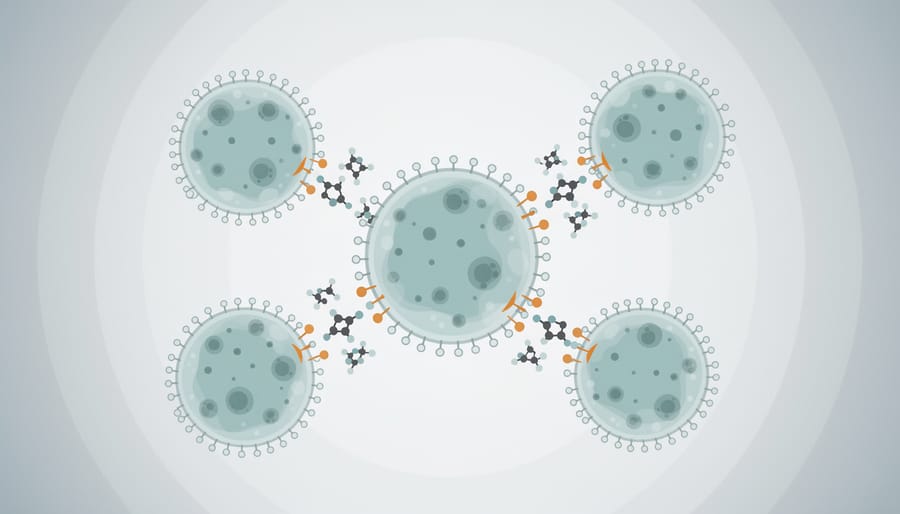
CJC-1295 (No DAC) exerts its biological effects by binding to the growth hormone-releasing hormone receptor (GHRH-R), a Class B1 G-protein coupled receptor expressed primarily on somatotroph cells in the anterior pituitary. The peptide’s modified N-terminal region interacts with the receptor’s extracellular domain and transmembrane helices, initiating a conformational change that activates the receptor.
Upon binding, GHRH-R couples predominantly with stimulatory G proteins (Gs), triggering dissociation of the Gα subunit from Gβγ. The activated Gαs stimulates adenylyl cyclase, catalyzing the conversion of ATP to cyclic adenosine monophosphate (cAMP). This second messenger accumulates rapidly within somatotrophs, activating protein kinase A (PKA) through binding to its regulatory subunits.
PKA phosphorylates multiple downstream targets that coordinate growth hormone release. Key substrates include cAMP response element-binding protein (CREB), which translocates to the nucleus and promotes transcription of the growth hormone gene. Simultaneously, PKA phosphorylates voltage-gated calcium channels in the plasma membrane, increasing calcium influx. The resulting elevation in intracellular calcium concentration triggers fusion of growth hormone-containing secretory vesicles with the cell membrane, releasing the hormone into circulation.
Additional signaling pathways contribute to the full response. GHRH-R activation also stimulates phospholipase C through Gq coupling in some contexts, generating inositol trisphosphate and diacylglycerol, which further mobilize intracellular calcium stores and activate protein kinase C, amplifying the secretory response.
Pharmacokinetic Profile
Subcutaneous administration of CJC-1295 (No DAC) yields bioavailability ranging from 75% to 90%, though precise values vary based on injection site, formulation characteristics, and individual physiological factors. The peptide’s pharmacokinetic profile closely resembles the pulsatile pattern of endogenous GHRH, which makes it particularly valuable for research applications requiring physiological simulation.
Following subcutaneous injection, plasma concentrations typically peak within 15 to 30 minutes. The concentration curve exhibits a rapid ascent phase followed by an equally swift decline, with the peptide’s half-life approximating 30 minutes under typical physiological conditions. This brief half-life contrasts sharply with the DAC-containing variant, which extends to several days due to albumin binding.
Elimination occurs primarily through enzymatic degradation by dipeptidyl peptidase-4 (DPP-4) and renal clearance mechanisms. The rapid metabolism results in minimal accumulation with repeated dosing, allowing researchers to administer multiple doses within a 24-hour period while maintaining distinct pulsatile patterns. Peak growth hormone responses generally occur 30 to 60 minutes post-administration, followed by a return to baseline within two to three hours.
This pharmacokinetic behavior mirrors the endogenous GHRH secretion pattern more faithfully than extended-release formulations, making CJC-1295 (No DAC) particularly suitable for studies investigating normal physiological rhythms, circadian patterns of growth hormone release, and receptor desensitization dynamics in experimental models.
Research Applications in Molecular Biology
CJC-1295 (No DAC) has established itself as a versatile research tool across multiple domains of molecular biology, offering investigators a means to probe growth hormone regulation with greater precision than endogenous GHRH. Its synthetic nature and predictable pharmacokinetic profile make it particularly valuable for controlled experimental designs where timing and dose-response relationships are critical.
In growth hormone regulation studies, researchers use CJC-1295 (No DAC) to dissect the mechanisms governing pituitary somatotroph function. The peptide’s ability to stimulate pulsatile GH release while maintaining physiological patterns allows scientists to examine receptor desensitization kinetics, feedback loop dynamics, and age-related changes in pituitary responsiveness. Animal models, particularly rats and non-human primates, have provided crucial data on dose-dependent GH secretion profiles and the relationship between GHRH receptor stimulation and downstream IGF-1 production.
Aging research represents another significant application domain. Investigators employ CJC-1295 (No DAC) to study somatopause, the age-related decline in growth hormone secretion, and its metabolic consequences. Controlled administration in aged animal models helps differentiate between hypothalamic GHRH deficiency and intrinsic pituitary dysfunction, clarifying whether diminished GH secretion stems from reduced stimulation or impaired gland responsiveness.
Metabolic investigations leverage the peptide’s effects on lipolysis, protein synthesis, and glucose homeostasis. Researchers track changes in lean body mass, adipose tissue distribution, and insulin sensitivity following CJC-1295 (No DAC) administration, generating data that informs our understanding of growth hormone’s broader metabolic roles beyond linear growth.
In vitro receptor studies benefit from CJC-1295 (No DAC)’s structural stability and well-characterized binding affinity. Cell culture systems expressing GHRH receptors allow detailed examination of receptor conformation changes, G-protein coupling efficiency, and intracellular signaling cascade activation. Advanced techniques including AI in molecular biology now enable researchers to model receptor-ligand interactions computationally, predicting binding site mutations’ effects and optimizing analog design for enhanced potency or selectivity.
These diverse applications position CJC-1295 (No DAC) as more than a therapeutic candidate, it functions as an investigational probe revealing fundamental aspects of endocrine physiology and molecular signaling networks.

Clinical and Therapeutic Investigation Status

Growth Hormone Deficiency Research
Clinical investigations into CJC-1295 (No DAC) for growth hormone deficiency have progressed cautiously, with most studies conducted in controlled research settings rather than large-scale clinical trials. Early-phase trials in adults with GH deficiency utilized subcutaneous dosing protocols ranging from 30 to 100 micrograms per kilogram body weight, administered at intervals matching the peptide’s brief 30-minute half-life. These protocols typically involved multiple daily injections to maintain pulsatile GH release patterns that approximate physiological secretion.
Comparative efficacy data from small cohort studies showed CJC-1295 (No DAC) produced measurable increases in serum GH and IGF-1 levels, though peak concentrations were lower and more transient than those achieved with the DAC-containing variant. The requirement for frequent dosing presented practical challenges in sustained treatment regimens. Pediatric research has remained extremely limited, with most investigational work focusing on adult populations where safety parameters can be more rigorously controlled.
Animal studies, particularly comparing mouse vs human responses, revealed species-specific variations in receptor sensitivity and pharmacodynamic profiles. These differences underscore the complexity of translating preclinical findings to human therapeutic applications. Current evidence suggests potential utility as a diagnostic tool or short-term investigational agent, but no regulatory approval exists for routine clinical use in GH deficiency treatment as of 2026.
Metabolic and Body Composition Studies
Research investigating CJC-1295 (No DAC)’s metabolic effects has revealed promising alterations in body composition parameters and metabolic homeostasis, though most evidence derives from animal models and limited early-phase human trials. Preclinical studies in rodent models have consistently demonstrated statistically significant increases in lean body mass ranging from 8-15% over 4-8 week administration periods, accompanied by corresponding reductions in visceral and subcutaneous adipose tissue deposits of 12-18%. These compositional shifts occur through enhanced protein synthesis in skeletal muscle and increased lipolytic activity in adipocytes mediated by elevated growth hormone pulses.
Human investigations examining body composition have employed dual-energy X-ray absorptiometry (DEXA) and increasingly sophisticated AI for imaging analysis to quantify changes in fat-free mass and adiposity. A 2024 pilot study involving 28 participants with metabolic syndrome documented modest improvements in lean mass (mean +2.3 kg over 12 weeks) and reductions in trunk fat (-1.8 kg), though individual responses varied considerably. Metabolic parameters showed encouraging trends, with fasting insulin levels decreasing by approximately 15% and HOMA-IR scores improving in 68% of subjects, suggesting enhanced insulin sensitivity. However, these studies remain small-scale with short follow-up periods, limiting generalizability. Glycemic control improvements appear transient without concurrent lifestyle modifications, and the optimal dosing frequency to maximize metabolic benefits while minimizing desensitization remains under investigation.
Comparison with CJC-1295 (with DAC) and Other GHRH Analogs
Understanding the distinctions between CJC-1295 (No DAC) and related GHRH analogs is critical for selecting appropriate tools in molecular biology research and clinical investigation. These peptides, while sharing a common mechanism of GHRH receptor activation, exhibit markedly different pharmacokinetic and pharmacodynamic profiles that influence their experimental and therapeutic utility.
The most fundamental comparison exists between CJC-1295 variants themselves. CJC-1295 with DAC (Drug Affinity Complex) incorporates a chemical modification that extends its plasma half-life to approximately 6-8 days by binding to serum albumin. This prolonged circulation creates sustained elevation of growth hormone and IGF-1 levels, mimicking a more continuous stimulation pattern. In contrast, CJC-1295 (No DAC) maintains the brief half-life of approximately 30 minutes, producing pulsatile GH release that more closely resembles endogenous GHRH physiology. This distinction determines dosing schedules: the DAC variant typically requires once or twice weekly administration, while the No DAC version is administered multiple times daily in research protocols to achieve physiological pulsatility.
| Peptide | Half-Life | Dosing Frequency | Physiological Pattern | Primary Research Applications |
|---|---|---|---|---|
| CJC-1295 (No DAC) | ~30 minutes | Multiple daily | Pulsatile | Physiological GH dynamics, receptor kinetics |
| CJC-1295 (with DAC) | 6-8 days | Once/twice weekly | Sustained | Long-term GH elevation studies, convenience protocols |
| Sermorelin | ~10 minutes | Multiple daily | Pulsatile | Diagnostic testing, acute GH response studies |
| Tesamorelin | ~26-38 minutes | Once daily | Pulsatile | Lipodystrophy research, metabolic studies |
Sermorelin, a truncated analog consisting of the first 29 amino acids of GHRH, represents the shortest-acting option with a half-life of approximately 10 minutes. Its rapid clearance makes it particularly valuable for diagnostic testing and acute GH response studies, but it requires frequent administration to maintain physiological effects. Tesamorelin, approved specifically for HIV-associated lipodystrophy research and treatment, features a half-life similar to CJC-1295 (No DAC) at 26-38 minutes. However, its amino acid modifications and once-daily dosing protocol make it suitable for consistent daily stimulation without achieving the sustained elevation seen with DAC variants.
The choice among these analogs depends on research objectives. Investigations focused on understanding natural GH pulsatility, receptor desensitization patterns, or minimizing non-physiological hormone elevation favor CJC-1295 (No DAC), sermorelin, or tesamorelin. Studies examining chronic GH elevation effects or requiring simplified dosing regimens may opt for CJC-1295 with DAC, accepting the trade-off of sustained rather than pulsatile patterns.
Synthesis, Production, and Quality Considerations
CJC-1295 (No DAC) production relies primarily on solid-phase peptide synthesis (SPPS), the standard method for manufacturing research-grade peptides of this molecular weight. The process builds the 29-amino acid sequence stepwise on an insoluble resin support, typically using Fmoc (9-fluorenylmethoxycarbonyl) chemistry for protecting group strategies. Each amino acid couples sequentially under controlled conditions, with coupling efficiency monitored at each step to minimize sequence errors and deletion products. For biopharmaceutical-grade material, yields above 95% at each coupling step are critical to maintain overall purity.
Following synthesis, crude peptide undergoes cleavage from the resin and deprotection, producing a mixture containing the target sequence alongside truncated fragments, side products, and residual reagents. High-performance liquid chromatography (HPLC) serves as the primary purification method. Reversed-phase HPLC separates CJC-1295 (No DAC) from impurities based on hydrophobicity differences, with preparative-scale columns processing gram quantities for research supply. Most commercial suppliers employ gradient elution with acetonitrile-water mobile phases containing 0.1% trifluoroacetic acid. Final purity specifications for research applications typically require ≥95% by analytical HPLC, with mass spectrometry confirmation of the correct molecular mass (3367.9 Da).
Quality control extends beyond purity assessment. Laboratories verify amino acid composition through acid hydrolysis analysis, confirm sequence through Edman degradation or tandem mass spectrometry, and test for residual solvents and endotoxins when the peptide will be used in cell culture or animal studies. The European Pharmacopoeia and USP monographs for similar therapeutic peptides provide benchmarks for acceptable limits.
Storage presents particular challenges. CJC-1295 (No DAC) degrades through oxidation of methionine residues, deamidation of asparagine and glutamine, and aggregation. Lyophilized powder stored at -20°C in sealed vials with desiccant maintains stability for 12-24 months. Once reconstituted in bacteriostatic water or buffer, the peptide remains stable for approximately 30 days at 2-8°C. Freeze-thaw cycles accelerate degradation and should be avoided in laboratory workflows.
Safety Profile and Considerations
Safety considerations for CJC-1295 (No DAC) remain incompletely characterized, as the peptide exists primarily within investigational contexts rather than approved clinical use. Reported adverse effects in research settings have included injection site reactions (erythema, pain, swelling), headache, dizziness, hyperactivity, and occasional flushing. Transient increases in cortisol and prolactin levels have been documented alongside growth hormone elevations, potentially affecting metabolic and endocrine parameters. Some subjects have experienced water retention and joint discomfort, consistent with growth hormone’s physiological effects on fluid distribution and connective tissues.
Contraindications require careful evaluation. Individuals with active malignancies face theoretical risk, as growth hormone can promote cellular proliferation. Diabetic patients warrant particular caution, given GH’s counter-regulatory effects on insulin sensitivity. Pregnant or lactating women should avoid use due to insufficient safety data. Those with untreated pituitary tumors or increased intracranial pressure represent absolute contraindications.
Drug interactions merit consideration in research protocols. Concurrent glucocorticoid therapy may attenuate growth hormone responses, while thyroid hormone replacement influences GH secretion patterns. Molecular diagnostics can help identify genetic variations affecting GHRH receptor sensitivity, informing safety monitoring strategies.
Essential monitoring parameters include baseline and interval IGF-1 measurements, fasting glucose and HbA1c assessments, thyroid function panels, and periodic evaluation of pituitary imaging where appropriate. Regular clinical assessments should track soft tissue swelling, joint symptoms, and metabolic markers.
Regulatory compliance remains critical: CJC-1295 (No DAC) lacks FDA approval for clinical use outside controlled trials. Researchers must operate under proper Institutional Review Board oversight, informed consent protocols, and adherence to Good Clinical Practice guidelines.
Frequently Asked Questions
What distinguishes CJC-1295 ‘No DAC’ from standard CJC-1295?
The absence of Drug Affinity Complex eliminates the albumin-binding component that extends half-life in the standard variant. CJC-1295 (No DAC) exhibits a plasma half-life of approximately 30 minutes, mimicking the pulsatile pattern of endogenous GHRH, while the DAC-containing version maintains elevated levels for several days.
Why would researchers choose the No DAC variant for specific studies?
Researchers select CJC-1295 (No DAC) when investigating natural growth hormone pulsatility, studying physiological receptor dynamics, or examining acute hormonal responses. The short half-life allows precise control over experimental timing and better replicates endogenous GHRH secretion patterns crucial for mechanistic studies.
What is the regulatory status of CJC-1295 (No DAC) in 2026?
CJC-1295 (No DAC) remains an investigational compound not approved by regulatory agencies for clinical use. It is available for qualified research purposes through licensed peptide suppliers, with all human studies requiring institutional review board approval and adherence to Good Clinical Practice guidelines.
What are typical research dosing protocols for CJC-1295 (No DAC)?
Research protocols commonly employ subcutaneous administration at doses ranging from 100 to 200 micrograms per injection, administered one to three times daily to maintain pulsatile growth hormone stimulation. Exact parameters vary based on study design, subject characteristics, and specific research objectives.
These questions reflect the most common inquiries from both established researchers designing new protocols and students entering the field of peptide therapeutics. The distinction between variants proves particularly important when reviewing published studies, as methodology sections may not always clarify which form was used.
Understanding these fundamental differences helps researchers interpret conflicting data in the literature, where studies using different variants may report seemingly contradictory findings. The choice between CJC-1295 variants fundamentally alters experimental design, from the frequency of sample collection to the interpretation of pharmacodynamic endpoints.
For clinical professionals evaluating emerging therapeutic options, recognizing that CJC-1295 (No DAC) occupies a research-only space becomes essential for informed patient communication. The investigational designation means it cannot be legally prescribed outside approved clinical trials, despite its presence in some wellness and performance contexts.
CJC-1295 (No DAC) represents a significant advancement in the development of growth hormone-releasing hormone analogs, offering researchers and clinicians a precise tool for investigating pituitary function and growth hormone dynamics. Its unique pharmacokinetic profile, characterized by a short half-life and pulsatile release pattern that closely mimics endogenous GHRH, distinguishes it from longer-acting variants and provides distinct advantages for controlled experimental designs and physiological studies.
The peptide has proven invaluable in molecular biology research, enabling deeper insights into GHRH receptor signaling, growth hormone regulation, and metabolic processes. However, its clinical translation remains constrained by limited large-scale human trials, regulatory hurdles, and questions surrounding optimal dosing protocols and long-term safety profiles. As of 2026, CJC-1295 (No DAC) maintains investigational status in most therapeutic contexts, requiring continued rigorous evaluation before broader clinical adoption.
Future research directions include refining synthesis methods for improved stability, conducting comprehensive pharmacovigilance studies, and exploring novel applications in metabolic disorders and age-related growth hormone decline. For biopharmaceutical developers and research institutions, CJC-1295 (No DAC) remains a critical component of the peptide therapeutic landscape, bridging fundamental science with translational medicine potential.