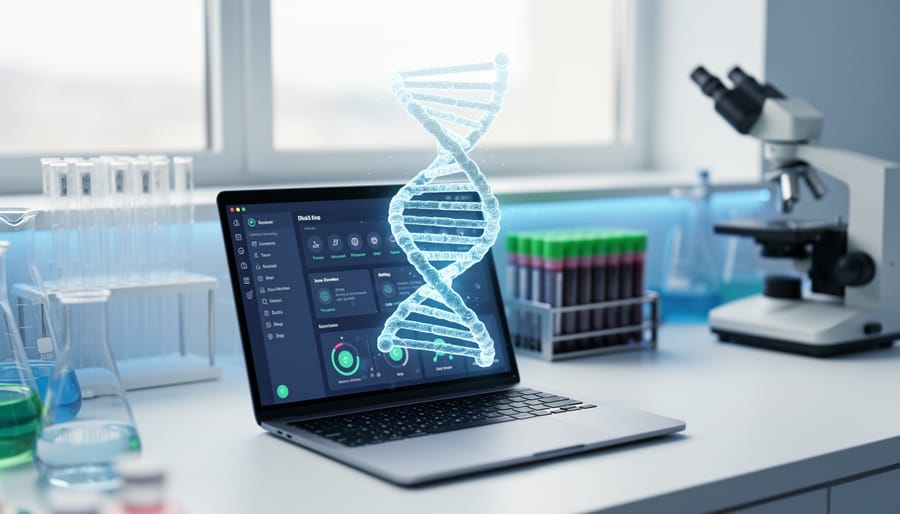
Artificial intelligence and data science have fundamentally transformed molecular biology research by enabling scientists to extract meaningful patterns from massive genomic datasets, predict protein structures with unprecedented accuracy, and accelerate drug discovery timelines from years to months. These computational disciplines now serve as essential tools in modern laboratories, where researchers apply machine learning algorithms to interpret complex biological systems, automate experimental workflows, and identify therapeutic targets that would remain hidden in traditional analysis approaches.
The integration of AI-driven methodologies into molecular biology addresses a critical challenge: biological data generation now far outpaces human analytical capacity. Next-generation sequencing platforms produce terabytes of genomic information daily, single-cell technologies capture expression profiles from millions of cells simultaneously, and high-throughput screening generates compound activity data across thousands of targets. Traditional statistical methods cannot adequately process this volume or complexity, creating an urgent need for sophisticated computational approaches that can identify biologically relevant signals within noise-heavy datasets.
Data science techniques such as deep learning, neural networks, and ensemble modeling have proven particularly effective in molecular biology applications. Researchers use convolutional neural networks to classify cellular images and detect rare phenotypes, recurrent neural networks to predict RNA secondary structures, and random forest algorithms to prioritize candidate genes in genome-wide association studies. These methods have contributed to breakthrough discoveries in structural biology, including AlphaFold’s protein folding predictions, and have influenced impact factor trends in leading journals that increasingly publish computational biology research alongside traditional bench science.
Implementation requires both technical expertise and biological domain knowledge. Successful AI applications in molecular biology depend on carefully curated training datasets, appropriate model selection for specific biological questions, and rigorous validation using experimental methods. This intersection of computational power and biological insight defines the current frontier of life sciences research, where interdisciplinary teams collaborate to translate algorithmic predictions into testable hypotheses and clinical applications.
The Data Science Foundation: Why Biology Needs AI Now
The molecular biology field generates biological data at a scale that surpasses human analytical capacity by orders of magnitude. A single next-generation sequencing run can produce over a terabyte of raw genomic information in a matter of hours, while high-throughput screening experiments routinely evaluate millions of molecular interactions simultaneously. This explosion of data spans every major technology platform driving biological discovery.
Modern genomics facilities now sequence entire human genomes for under $1,000, making population-scale genetic studies involving hundreds of thousands of participants economically feasible. Each genome contains approximately three billion base pairs requiring analysis for variants, structural changes, and regulatory elements. Mass spectrometry-based proteomics experiments similarly identify and quantify tens of thousands of proteins and their modifications across multiple conditions, creating datasets that dwarf traditional Western blot approaches. Imaging technologies compound this challenge further: a single week of automated microscopy screening can produce petabytes of cellular images requiring phenotypic classification and quantitative measurement.
Traditional statistical methods that served molecular biology well for decades simply cannot handle this volume and complexity. Standard spreadsheet-based analyses fail when datasets contain millions of features across thousands of samples. Classical hypothesis testing approaches become statistically problematic when evaluating hundreds of thousands of potential associations simultaneously, creating false discovery issues that manual review cannot adequately address. The relationships hidden within modern biological datasets involve non-linear interactions across multiple variables that escape detection by conventional linear regression or simple correlation metrics.
This computational bottleneck increasingly constrains scientific progress rather than experimental capabilities. Researchers now spend months performing analyses that delay discovery, while valuable signals remain buried in unexamined data. The integration challenge grows worse as laboratories attempt to combine genomic, proteomic, metabolomic, and phenotypic measurements from the same biological systems, creating multidimensional datasets that traditional tools were never designed to interpret.
Artificial intelligence and data science provide the essential computational infrastructure to transform this data deluge into biological insight. Machine learning algorithms excel at detecting complex patterns across massive feature spaces, while deep learning architectures can learn hierarchical representations directly from raw data without requiring hand-engineered features. These approaches scale efficiently to datasets containing billions of data points and can integrate heterogeneous data types that conventional methods handle poorly. The necessity for AI-driven data science in molecular biology research reflects not just convenience but fundamental mathematical reality: the complexity and scale of modern biological data simply exceed human cognitive and computational capacity without algorithmic assistance.

Core AI Data Science Applications in Molecular Biology
Genomic Sequence Analysis and Variant Prediction
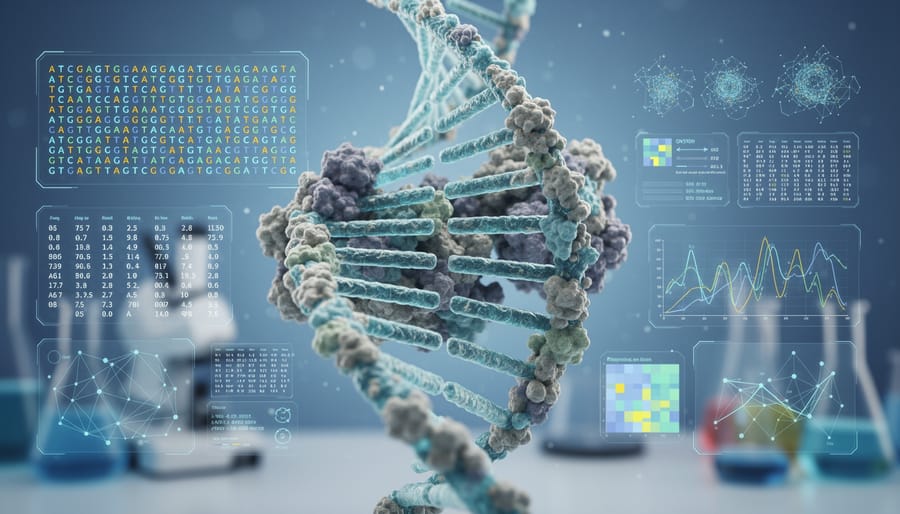
Genomic sequence analysis represents one of the most mature applications where artificial intelligence and data science converge in molecular biology. Machine learning algorithms excel at processing the massive datasets generated by next-generation sequencing, identifying subtle patterns in DNA sequences that traditional bioinformatics approaches often miss. Convolutional neural networks can scan genomic regions to detect regulatory elements, splice sites, and transcription factor binding motifs with accuracy that now surpasses hand-coded rules and position weight matrices.
Deep learning architectures have transformed variant calling, the process of identifying genetic differences between individuals and reference genomes. Recurrent neural networks and transformer models analyze sequencing reads in their full context, accounting for complex error patterns, local sequence composition, and mapping artifacts that confound simpler methods. These AI systems reduce both false positives and false negatives, particularly in challenging genomic regions with repetitive sequences or structural variations.
Modern AI-driven variant callers achieve 99.8% accuracy in detecting single nucleotide variants, a precision level that has fundamentally changed how we approach clinical genomics and population studies.
Predicting the functional impact of variants pushes artificial intelligence and data science even further. Ensemble models integrate sequence conservation, protein structure predictions, gene expression data, and evolutionary information to classify whether a mutation is likely pathogenic. Tools powered by gradient boosting and deep neural networks can now distinguish disease-causing variants from benign polymorphisms with sensitivity approaching 95%, with direct implications for drug discovery and personalized medicine.
The latest architectures employ attention mechanisms that highlight which genomic features drive each prediction, addressing the interpretability challenge that has limited clinical adoption. As training datasets expand to include millions of annotated variants, these AI systems continue improving their ability to identify rare pathogenic mutations and predict phenotypic consequences.
Protein Structure Prediction and Drug Discovery
Protein folding prediction represents one of the most celebrated breakthroughs where artificial intelligence and data science have revolutionized molecular biology. Deep learning systems like AlphaFold2 can now predict three-dimensional protein structures from amino acid sequences with near-experimental accuracy, a feat that would have taken months or years using traditional crystallography methods. This computational power accelerates understanding of protein function and enables researchers to model previously intractable targets, opening new avenues for therapeutic intervention.
In drug discovery workflows, AI-driven data science pipelines integrate multiple computational stages. Machine learning models screen millions of potential compounds against protein targets through virtual docking simulations, predicting binding affinities and identifying lead candidates far faster than wet-lab screening alone. These algorithms learn from vast databases of known protein-ligand interactions, chemical properties, and pharmacokinetic data to prioritize molecules with the highest therapeutic potential and lowest toxicity risks. Pharmaceutical companies now routinely employ ensemble models that combine structure prediction, molecular dynamics simulations, and ADMET (absorption, distribution, metabolism, excretion, toxicity) predictions within unified data science frameworks.
The integration extends beyond small molecules to biologics development. AI platforms guide the design of antibodies, peptides, and even personalized treatments like the RNA cancer vaccine by modeling immune epitope presentation and antigen-antibody interactions. Data science pipelines manage the iterative cycle of computational prediction, experimental validation, and model refinement, creating feedback loops that continuously improve predictive accuracy. This convergence of structural biology expertise with machine learning capabilities has compressed drug development timelines from decades to years in some cases, fundamentally altering pharmaceutical research economics.
Single-Cell Analysis and Spatial Transcriptomics
Single-cell RNA sequencing generates datasets with tens of thousands of features per cell across hundreds of thousands to millions of individual cells. This complexity overwhelms conventional statistical approaches, making artificial intelligence and data science essential for extracting meaningful biological insights from these high-dimensional data clouds.
Machine learning clustering algorithms form the backbone of single-cell analysis. Methods like Leiden and Louvain partition cells into distinct populations based on transcriptional similarity, while dimensionality reduction techniques such as UMAP and t-SNE compress thousands of gene expression measurements into visualizable two-dimensional spaces without losing critical biological structure. These AI-driven approaches reveal cell type identities, rare subpopulations, and previously unrecognized intermediate states that traditional bulk sequencing masks.
Trajectory inference represents a particularly powerful application where data science reconstructs cellular development pathways. Algorithms like RNA velocity and Monocle trace differentiation processes by ordering cells along pseudotime axes, predicting how stem cells progress toward specialized fates. These computational reconstructions provide testable hypotheses about developmental biology and disease progression.
Spatial transcriptomics adds location context to single-cell data, creating datasets where each measurement includes both gene expression and physical coordinates. AI models integrate these layers, identifying spatially restricted cell populations, mapping tissue architecture, and discovering how cellular neighborhoods influence function. Deep learning architectures now predict spatial gene expression patterns from histology images alone, bridging morphology with molecular state.
The data science challenge intensifies with batch effects, technical noise, and integration across multiple datasets. Transfer learning and domain adaptation techniques borrowed from computer vision help normalize data from different platforms and laboratories, enabling meta-analyses that pool evidence across studies. These artificial intelligence methods transform fragmented experiments into comprehensive cellular atlases mapping entire organs and organisms.
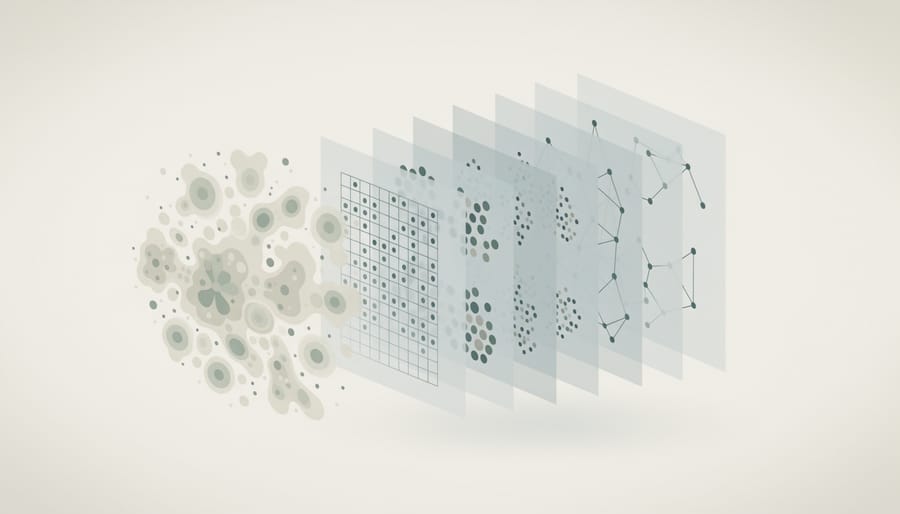
Image Analysis for Microscopy and Pathology
Microscopy and pathology have generated terabyte-scale image datasets that overwhelm manual analysis capacity. Computer vision models trained on these images now perform tasks that once required entire teams of skilled technicians. Deep convolutional neural networks excel at recognizing cellular structures, quantifying morphological features, and detecting subtle patterns invisible to human observers.
For automated cell counting, data science pipelines combine image segmentation algorithms with object detection frameworks. These systems process fluorescence microscopy images to identify nuclei boundaries, track cell division events, and measure population dynamics across time-lapse experiments. Modern approaches achieve over 95% accuracy on challenging datasets where cells overlap or show irregular morphology.
Phenotype classification represents a more nuanced challenge. Artificial intelligence models learn to distinguish healthy cells from diseased states, identify different cell types in mixed populations, and categorize subtle morphological changes induced by drug treatments. Transfer learning techniques allow researchers to adapt pre-trained networks to specific biological contexts with relatively small training sets, addressing the practical constraint that annotated microscopy data remains scarce.
In diagnostic pathology, AI-powered image analysis assists pathologists by highlighting regions of interest in tissue sections, grading tumor severity, and predicting patient outcomes from histological patterns. These data science applications integrate multiple staining channels, spatial context, and learned feature representations that capture tissue architecture at scales ranging from subcellular structures to whole-slide patterns. Early clinical implementations show these systems can match or exceed human performance on specific diagnostic tasks while maintaining consistent reliability across thousands of samples.
Essential Data Science Techniques Powering Biological AI
Molecular biology generates datasets with unique characteristics that demand specialized data science approaches. The high dimensionality, noise levels, and biological complexity of these datasets require techniques that can extract meaningful patterns while accounting for inherent experimental variability and biological heterogeneity.
Supervised Learning for Classification and Prediction
Supervised machine learning algorithms form the backbone of many biological prediction tasks. These methods learn from labeled training data to classify new samples or predict continuous outcomes. Support vector machines excel at separating complex biological classes in high-dimensional space, making them valuable for cancer subtype classification from gene expression profiles. Random forests aggregate multiple decision trees to handle non-linear relationships common in biological systems while providing feature importance rankings that identify which genes or proteins drive observed phenotypes. Neural networks, particularly deep learning architectures, have revolutionized image-based diagnostics and sequence analysis by automatically learning hierarchical representations from raw data without manual feature engineering.
Unsupervised Approaches for Discovery
When researchers lack predefined labels, unsupervised learning techniques reveal hidden structure in biological data. Clustering algorithms like k-means and hierarchical clustering group similar samples together, enabling discovery of novel cell types in single-cell RNA sequencing experiments. Dimensionality reduction methods compress high-dimensional datasets into visualizable spaces while preserving essential relationships. Principal component analysis identifies linear combinations of features that capture maximum variance, while t-SNE and UMAP preserve local neighborhood structures that reveal subtle distinctions between cell states or experimental conditions.
- Supervised Learning
- Algorithms trained on labeled examples to predict outcomes for new data, such as classifying disease subtypes from molecular profiles or predicting protein function from sequence.
- Unsupervised Learning
- Methods that discover patterns and structure in unlabeled data without predefined categories, commonly used for identifying cell populations or grouping similar experimental samples.
- Neural Networks
- Multi-layered computational models inspired by biological neurons that learn complex patterns through training, particularly powerful for image analysis and sequence prediction tasks.
- Random Forests
- Ensemble methods combining multiple decision trees to make robust predictions while handling non-linear biological relationships and providing interpretable feature importance scores.
- Dimensionality Reduction
- Techniques like PCA, t-SNE, and UMAP that compress high-dimensional biological data into lower dimensions for visualization and analysis while preserving key relationships.
- Feature Engineering
- The process of transforming raw biological measurements into informative variables that machine learning models can effectively use, such as converting DNA sequences into nucleotide composition statistics.
Feature Engineering and Biological Context
Translating raw biological measurements into meaningful inputs for machine learning requires domain expertise. Feature engineering transforms sequences, structures, and experimental readouts into numerical representations that capture biological relevance. For genomic data, this might include computing GC content, sequence motifs, or evolutionary conservation scores. For protein data, physicochemical properties, secondary structure predictions, and interaction network statistics provide informative features. The quality of these engineered features often determines model performance more than algorithm selection.
Ensemble Methods and Model Validation
Biological datasets rarely provide unlimited training examples, making robust validation critical. Cross-validation strategies partition data to assess generalization while avoiding overfitting to training samples. Ensemble approaches combine predictions from multiple models to improve reliability and reduce sensitivity to individual algorithm biases. Gradient boosting iteratively builds models that correct previous errors, achieving strong performance on structured biological data like clinical measurements or molecular descriptors. Proper validation ensures that models capture genuine biological signal rather than technical artifacts or batch effects.

Building AI Data Science Pipelines for Molecular Research
Building effective pipelines requires systematic attention to each stage of the computational workflow. Most molecular biology labs underestimate infrastructure needs when starting AI projects, adequate storage, GPU compute capacity, and version control systems form the essential foundation before writing a single line of code.
Data collection establishes everything downstream. Raw experimental outputs from sequencers, microscopes, or mass spectrometers must flow into standardized formats immediately. Many pipelines fail because teams manually wrangle spreadsheets months after experiments conclude. Automated ingestion scripts that capture metadata alongside measurements prevent the “lost context” problem that makes datasets unusable for machine learning. Tools like Galaxy or Nextflow help orchestrate these early stages while maintaining provenance records.
Preprocessing consumes 60-80% of most projects yet receives insufficient planning. Biological data arrives messy, missing values from failed wells, batch effects between experimental runs, and technical noise obscuring biological signals. Normalization methods suitable for one assay type often fail for others, so understanding your data’s characteristics matters more than blindly applying standard recipes. Libraries such as scikit-learn for Python or Bioconductor for R provide frameworks, but you’ll customize extensively. Document every transformation decision because reviewers and collaborators will demand justification.
Model selection depends on your biological question, not popularity. Convolutional networks excel at image analysis tasks like cell segmentation. Random forests handle tabular omics data with missing values gracefully. Transformer architectures now dominate sequence analysis. Resist choosing tools based on recent hype, a simpler interpretable model often outperforms complex approaches when training data is limited, which remains common in specialized molecular contexts.
Validation separates credible research from computational storytelling. Hold-out test sets must represent truly unseen conditions, not just random splits of the same batch. Cross-validation helps but doesn’t replace independent biological replication. The best pipelines incorporate “reality checks” where predictions get tested experimentally before publication. This feedback loop catches overfitting that statistical metrics miss.
Reproducibility demands more than sharing code on GitHub. Containerization via Docker captures exact software environments including library versions. Workflow management systems like Snakemake or CWL document every step from raw files to final figures. Research compendiums that bundle code, data, and narrative together using tools like Jupyter notebooks enable others to recreate your analysis years later when dependencies have changed.
Cloud platforms now offer pay-as-you-go alternatives to institutional clusters, particularly valuable for burst computing needs during model training. Services like Google Cloud Life Sciences or AWS Batch handle infrastructure complexity, letting biologists focus on science rather than system administration.
Start small, build a minimal pipeline for one well-defined task before attempting end-to-end automation. Incremental expansion with continuous testing catches problems early when they’re fixable.
Challenges and Considerations for AI Implementation
Implementing artificial intelligence data science in molecular biology demands more than sophisticated algorithms. The biological research environment presents unique obstacles that can derail even well-designed computational projects if not addressed systematically.
Data quality stands as the first major hurdle. Biological datasets often contain batch effects, technical noise, missing values, and systematic biases introduced during sample preparation or measurement. Unlike curated benchmark datasets used in general machine learning, experimental data from cell cultures, tissue samples, or clinical specimens rarely arrives clean and standardized. Models trained on such data inherit these artifacts, potentially learning spurious correlations rather than genuine biological signals. Rigorous preprocessing, normalization protocols, and quality control metrics become non-negotiable steps before any AI analysis begins.
Model interpretability poses another significant challenge. Deep neural networks might achieve high accuracy in predicting protein binding sites or disease outcomes, yet provide no mechanistic insight into why. Molecular biologists need to understand causative factors, not just correlations. Black-box predictions, however accurate, struggle to gain acceptance when researchers cannot trace the reasoning behind them. This creates particular difficulty when validating novel findings or designing follow-up experiments. Approaches like attention mechanisms, SHAP values, and feature importance analyses help bridge this gap, though biological interpretation still requires specialist knowledge.
Computational resource requirements frequently constrain implementation. Training large models on genomic or imaging datasets demands substantial GPU clusters, storage infrastructure, and memory capacity beyond typical laboratory budgets. Cloud computing offers partial solutions but introduces data transfer bottlenecks and cost considerations. Smaller research groups may find themselves unable to replicate published methods or compete with well-funded institutions.
The interdisciplinary expertise gap represents perhaps the most persistent obstacle. Effective AI implementation requires individuals fluent in both computational methodology and biological context, a rare combination. Data scientists unfamiliar with molecular biology may miss critical experimental confounders or propose biologically implausible models. Conversely, biologists without statistical training struggle to properly validate models or recognize overfitting. Applications like AI in vaccine design demonstrate how successful projects demand genuine collaboration between specialists.
Overfitting presents heightened risk when working with limited biological datasets. Molecular biology studies often involve hundreds of features measured across dozens of samples, precisely the high-dimensional, small-sample regime where models easily memorize training data rather than learn generalizable patterns. Rigorous cross-validation, holdout test sets from independent experiments, and external validation on data from different laboratories become essential safeguards before publishing research findings.
The Future Landscape: Where AI Data Science Takes Biology Next
The convergence of artificial intelligence data science with molecular biology is accelerating toward several transformative frontiers that will reshape how research is conducted in the coming years.
Multimodal data integration represents perhaps the most immediate breakthrough. Current research typically analyzes genomic, proteomic, metabolomic, and imaging data in isolated silos. Emerging AI frameworks are learning to synthesize these diverse data types simultaneously, creating holistic cellular models that capture biological complexity no single data stream can reveal. These integrated approaches promise to uncover regulatory mechanisms and disease pathways that remain invisible when examining any single molecular layer.
Federated learning is addressing one of biology’s persistent challenges: data sharing across institutions while maintaining patient privacy and proprietary protections. This distributed machine learning approach allows models to train on data from multiple research centers without the raw data ever leaving its source. For molecular biology, this means collaborative AI systems can learn from vastly larger datasets than any single lab possesses, accelerating discoveries while respecting ethical and competitive boundaries. The technology is particularly relevant given how institutional priorities around cell biology funding often create data access barriers that slow progress.
AI-guided experimental design is moving beyond passive analysis toward active hypothesis generation and experimental optimization. Advanced systems now propose which experiments to conduct next, predict optimal conditions for protocols, and identify the most informative assays to run when research budgets are limited. This closed-loop approach, where AI learns from experimental outcomes and refines its suggestions, dramatically increases the efficiency of the scientific method itself.
The autonomous laboratory concept is transitioning from science fiction to practical implementation. Robotic systems guided by artificial intelligence data science algorithms can now execute complex experimental workflows with minimal human intervention, from sample preparation through data analysis. These platforms work continuously, testing hypotheses and refining protocols at speeds impossible for manual research teams.
Critical to all these advances is the deepening partnership between computational and bench scientists. The future belongs not to AI replacing biologists, but to hybrid teams where domain expertise guides algorithmic development and computational insights drive experimental priorities. Success requires researchers fluent in both laboratory techniques and data science principles, creating a new generation of scientists who think computationally while maintaining rigorous experimental standards.
The convergence of artificial intelligence and data science has fundamentally reshaped how molecular biologists approach research questions, analyze experimental data, and translate discoveries into practical applications. These computational tools aren’t merely accelerating existing workflows, they’re enabling entirely new categories of biological investigation that were previously impossible at scale.
Machine learning models now routinely detect patterns in genomic sequences that human analysts would miss, predict protein structures with remarkable accuracy, and extract meaningful insights from the noise of single-cell datasets. Data science pipelines handle the computational heavy lifting, transforming terabytes of raw biological information into actionable knowledge. Yet the most successful implementations of these technologies share a common trait: they combine algorithmic power with deep domain expertise.
The researchers making the greatest impact aren’t choosing between computational sophistication and biological understanding, they’re insisting on both. They recognize that an AI model trained on flawed data will produce flawed predictions, regardless of its mathematical elegance. They understand that biological systems don’t always behave according to computational assumptions, and that unexpected results demand experimental verification rather than blind trust in algorithmic output.
Moving forward, the molecular biology community faces a choice. Those who embrace artificial intelligence and data science thoughtfully, investing in both technical infrastructure and interdisciplinary collaboration, will unlock capabilities their predecessors could only imagine. They’ll design better therapeutics, decode cellular mechanisms with unprecedented precision, and accelerate the pace of discovery across the life sciences.
The tools are powerful, the opportunities are vast, and the potential for advancing human health and scientific knowledge has never been greater. Success belongs to those who wield these computational methods with both ambition and scientific rigor, maintaining the experimental standards that have always defined excellent biological research while leveraging the transformative potential of AI-driven analysis.