Molecular biology research has undergone three transformative shifts in 2026 that are fundamentally changing how laboratories approach gene editing precision, protein structure prediction, and single-cell analysis at scale. These advances stem from the convergence of artificial intelligence with traditional wet-lab techniques, enabling pharmaceutical companies to compress drug discovery timelines by as much as 40% while academic institutions gain access to previously cost-prohibitive technologies through open-source platforms.
The implications extend far beyond incremental progress. Clinical laboratories are restructuring their diagnostic workflows to incorporate real-time genomic analysis that was theoretical just 18 months ago. Biopharmaceutical R&D teams are abandoning legacy screening methods in favor of computational models that predict drug candidates with 85% clinical trial success rates, compared to the historical 10% benchmark. Academic researchers, particularly those in resource-limited settings, now access computational tools that democratize structural biology work once confined to elite institutions with cryo-EM facilities.
What distinguishes 2026 from previous years of steady advancement is the practical deployment of these technologies rather than proof-of-concept publications. Industry leaders report that the bottleneck has shifted from technical capability to workflow integration and regulatory framework adaptation. Collaborative efforts between computational biologists and experimental researchers have become essential, not optional, as the field moves toward a hybrid model where in silico predictions guide targeted experiments rather than broad screening approaches.
Understanding these developments matters for anyone making procurement decisions, planning research directions, or training the next generation of molecular biologists.
What Changed: Major Shifts Reshaping Molecular Biology Research
The molecular biology research landscape has undergone a fundamental transformation in 2026, driven by the convergence of three distinct forces that are reshaping how scientists investigate cellular mechanisms and disease pathways. Artificial intelligence has matured from a supplementary tool to a core component of experimental design, enabling researchers to predict molecular interactions with unprecedented accuracy. Simultaneously, next-generation sequencing technologies have achieved both the resolution and throughput needed to capture biological complexity at scales previously impossible, while remaining economically viable for broader adoption across research institutions.
Regulatory frameworks have evolved to accommodate these technological capabilities. The FDA and EMA established clearer pathways for AI-derived insights in drug development, while international standards for multi-omics data integration have enabled cross-laboratory collaboration on a scale that was logistically unfeasible just two years ago. These policy shifts have removed significant barriers that previously confined cutting-edge techniques to a handful of well-funded institutions.
Methodological breakthroughs have compounded these changes. Techniques that once required specialized expertise and months of optimization can now be executed with standardized protocols and automated workflows. Single-cell resolution has become the baseline expectation rather than an aspirational goal, spatial context is now routinely preserved during molecular profiling, and epigenetic modifications can be targeted with the same precision previously reserved for DNA sequences. These capabilities have fundamentally altered what questions researchers can ask and how quickly they can generate answers, creating a research environment where hypothesis testing cycles that once took years now unfold in months.
Key Developments: The Research Advances Defining 2026
1. AI-Driven Protein Structure Prediction Reaches Clinical Application
AI-driven protein structure prediction crossed a critical threshold in 2026, moving from research novelty to production infrastructure in drug discovery pipelines. AlphaFold3 and similar tools now routinely inform target selection and lead optimization at major pharmaceutical companies, with several candidates derived directly from AI-predicted structures entering Phase II trials this year. What changed isn’t just prediction accuracy, it’s the integration of AI data science into validated workflows that regulatory agencies recognize and biopharmaceutical teams trust.
The leap forward stems from two technical advances. First, models trained on experimental structures from the Protein Data Bank achieved atomic-level precision for protein-ligand interactions, not merely backbone geometry. Confidence scores now reliably distinguish high-quality predictions from uncertain regions, letting medicinal chemists decide which computational models warrant experimental validation. Second, cloud-based platforms reduced computational barriers: a structure that required weeks of traditional crystallography can be predicted in minutes, enabling researchers to screen thousands of variants before synthesizing a single molecule.
Dr. Sarah Chen, Director of Computational Biology at a leading biotech firm, describes the shift: “We’ve embedded AlphaFold into our earliest discovery stages. Instead of starting with known structures and hoping for analogs, we model the target variants our disease genetics suggest, then design molecules specifically for those predicted pockets. Our hit rates doubled because we’re engineering against the actual biology, not a crystallographic compromise.”
This practical deployment addresses a longstanding bottleneck: membrane proteins, disordered regions, and transient complexes that resist traditional structural methods. Researchers now tackle targets previously considered undruggable, expanding therapeutic possibilities across oncology, neurology, and rare diseases. The technology hasn’t replaced experimental validation, cryo-EM and crystallography remain essential, but it fundamentally reordered the discovery sequence, putting computational prediction at the front rather than confirming what experiments reveal.
2. CRISPR Epigenome Editing Technologies Expand Beyond Gene Sequences
CRISPR epigenome editing represents a fundamental shift from permanently altering genetic code to reversibly controlling when and how genes turn on or off. Unlike traditional CRISPR-Cas9 gene editing that cuts DNA, CRISPR dCas9 epigenome editing uses a catalytically inactive Cas9 protein fused to epigenetic modifiers that add or remove chemical marks controlling gene expression. This approach preserves the underlying genetic sequence while achieving therapeutic effects, reducing safety concerns about permanent genomic changes and off-target mutations.
The technology has matured significantly in 2026, moving beyond proof-of-concept demonstrations to validated research applications with reproducible results. Researchers now deploy dCas9-based epigenetic editors to activate silenced tumor suppressor genes in cancer models, repress inflammatory pathways in autoimmune disease research, and modulate metabolic genes in diabetes studies. These tools target DNA methylation, histone acetylation, and histone methylation with unprecedented precision, allowing fine-tuned control over cellular identity and function.
What distinguishes current epigenome editing from earlier attempts is the stability and duration of modifications. New fusion proteins combining dCas9 with improved epigenetic enzymes maintain gene expression changes for weeks rather than days, making them practical for therapeutic development. Researchers have also solved the delivery challenge that plagued first-generation tools: smaller dCas9 variants and optimized mRNA formats now fit within AAV vectors and lipid nanoparticles suitable for clinical translation.
This development changes therapeutic research by opening disease targets previously considered undruggable. Conditions caused by incorrect gene expression rather than mutations, including certain neurodevelopmental disorders and epigenetic aging signatures, now have potential intervention pathways. Biopharmaceutical companies are initiating preclinical programs targeting diseases where reversible gene modulation offers advantages over permanent editing, particularly for polygenic conditions requiring subtle expression adjustments across multiple genes. The reversibility also enables researchers to test hypotheses about gene function without committing to permanent alterations.
3. Single-Cell Multi-Omics Integration Becomes Standard Practice
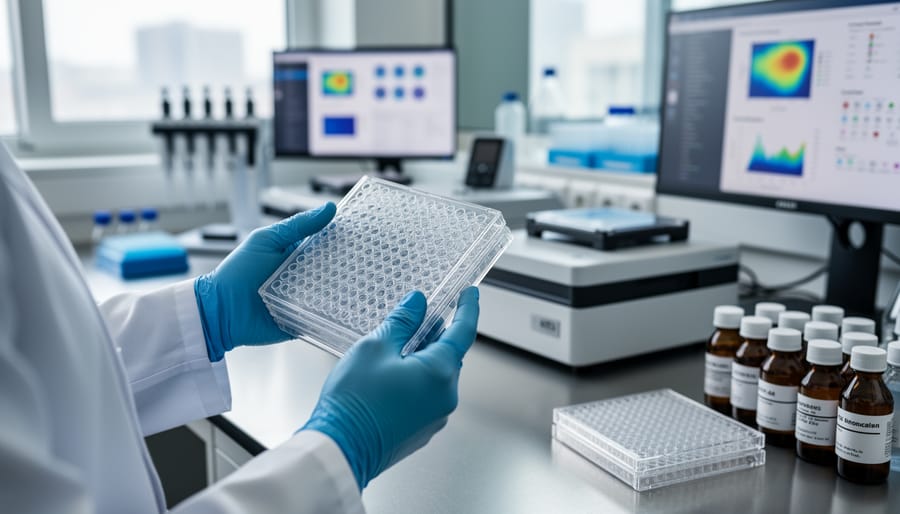
The simultaneous profiling of multiple molecular layers within individual cells has transitioned from an experimental luxury to a routine analytical approach across molecular biology laboratories. What began as technically demanding protocols requiring specialized equipment and extensive expertise now operates through standardized kits and automated workflows that deliver reproducible results at a fraction of previous costs.
The shift stems from three converging improvements. First, microfluidics platforms have evolved to reliably capture and process tens of thousands of single cells per run, with droplet-based systems achieving cell capture rates exceeding 65% compared to earlier 30-40% benchmarks. Second, sequencing chemistry advances enable researchers to measure RNA transcripts, surface proteins, and chromatin accessibility from the same cell without the signal interference that plagued earlier multiplexing attempts. Third, computational pipelines have matured to handle the integration and deconvolution of these layered datasets, transforming what once required custom bioinformatics solutions into point-and-click analysis software.
Cost reductions have proven equally transformative. Per-cell expenses for multi-omic profiling dropped from approximately $15-20 in 2023 to under $3 by mid-2026, bringing the technology within reach of grant-funded academic laboratories and smaller biotech operations. Reagent standardization eliminated much of the batch-to-batch variability that previously required extensive validation runs, while open-source data processing tools removed the need for proprietary software licenses.
Research applications reflect this democratization. Cancer researchers routinely map tumor heterogeneity and treatment resistance mechanisms through combined genomic and proteomic profiling. Immunologists dissect immune cell differentiation pathways by tracking transcriptional changes alongside metabolic shifts. Developmental biologists trace cellular lineages with unprecedented molecular detail, revealing regulatory networks that govern tissue formation.
The practical result: single-cell multi-omics has moved from validating findings generated by bulk methods to serving as the primary discovery platform where researchers expect to find their initial insights rather than confirm them.
4. Spatial Biology and In Situ Sequencing Transform Tissue Analysis
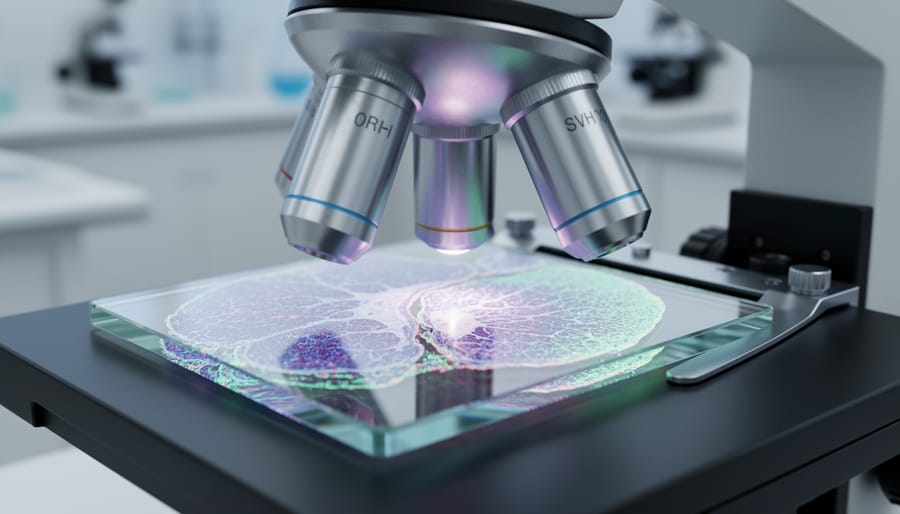
Spatial transcriptomics and proteomics platforms have matured from experimental tools into production-ready systems that map molecular information directly onto tissue sections. These technologies capture gene expression patterns, protein localization, and cellular interactions while preserving the native tissue architecture, solving a fundamental limitation of traditional dissociation-based methods that destroy spatial context.
The breakthrough stems from convergent technical advances: improved fluorescent probe chemistry, higher-resolution imaging systems, and computational tools that integrate morphological and molecular data layers. Costs have dropped substantially as commercial platforms scaled up, making spatial profiling accessible beyond specialized centers. Where a single spatial transcriptomics experiment might have cost $5,000, $10,000 in 2024, commercial service providers now offer comparable workflows at 40-60% lower prices with faster turnaround.
Several key platforms have established distinct niches in research applications:
- 10x Genomics Visium HD, whole-transcriptome profiling at subcellular resolution for tissue mapping studies
- NanoString GeoMx, targeted protein and RNA analysis in user-defined tissue regions for biomarker discovery
- Vizgen MERSCOPE, high-throughput in situ sequencing for single-molecule RNA detection across large tissue areas
- Akoya PhenoCycler, multiplexed protein imaging combining 40+ markers for immune profiling and cell phenotyping
Cancer researchers now routinely use spatial biology to map tumor microenvironments, revealing how immune cells, stromal populations, and cancer cells organize spatially, information critical for understanding therapy resistance and designing combination treatments. In neuroscience, spatial transcriptomics has clarified how cell types arrange into functional circuits and how molecular signatures change across brain regions in neurological diseases. Developmental biologists apply these methods to track how gene expression patterns drive tissue formation and organ development, capturing molecular events in their native anatomical context.
The shift matters because spatial data reveals biology that averaged bulk measurements miss: localized signaling gradients, cell-cell communication networks, and niche-specific responses that drive disease progression and therapeutic outcomes.
Why It Matters: Impact on Research, Industry, and Clinical Practice
These convergent advances are fundamentally restructuring how molecular biology research operates across multiple sectors. The changes affect daily workflows, strategic planning, and competitive positioning in ways that demand immediate attention from research leaders and institutional planners.
For biopharmaceutical companies, the shift toward AI-integrated protein modeling and epigenetic editing compresses drug discovery timelines dramatically. Programs that previously required five to seven years for target validation and lead optimization now complete these phases in eighteen to thirty-six months. This acceleration changes capital allocation strategies and makes early-stage investment decisions more data-driven. Companies establishing molecular partners gain access to specialized capabilities without building redundant infrastructure, particularly for spatial biology and multi-omics integration. The RNA cancer vaccine development pipeline directly benefits from improved epitope prediction and patient-specific tumor profiling enabled by single-cell technologies.
Clinical laboratories face an infrastructure crossroads. Implementing spatial transcriptomics and advanced molecular diagnostics requires new instrumentation, bioinformatics capacity, and staff training that represents substantial capital investment. Labs serving oncology practices need tissue analysis capabilities that preserve spatial context, not just sequence data. The equipment costs range from $400,000 to $1.2 million for comprehensive spatial biology platforms, with ongoing reagent expenses 30 to 40 percent higher than conventional sequencing workflows.
Academic research institutions must address a widening skills gap. Graduate programs designed around traditional molecular techniques no longer prepare students for research environments where computational modeling precedes bench work. Faculty hiring priorities are shifting toward candidates with hybrid expertise in experimental biology and machine learning. Grant applications increasingly require multi-omics integration plans and data management infrastructure that many institutions lack.
Healthcare delivery systems see these advances converging in precision medicine programs. Tumor boards now request spatial profiling alongside genomic panels, requiring pathology departments to develop new protocols and interpretation frameworks. The transition from reactive diagnosis to predictive medicine demands electronic health record systems capable of incorporating molecular data streams beyond simple test results.
Funding agencies are responding by prioritizing infrastructure grants for shared instrumentation facilities and training programs. National institutes directed $2.3 billion toward technology access programs in 2026, recognizing that innovation diffusion depends on reducing adoption barriers for smaller institutions.
What to Watch: Emerging Trends and Near-Term Developments
The convergence of several maturing technologies positions late 2026 and early 2027 as pivotal for molecular biology research capabilities. While current developments have transformed what researchers can measure and manipulate, the next wave will likely expand where these tools can be applied and at what scale.
Quantum computing applications in molecular simulation represent the most technically ambitious frontier. Prototype systems from multiple consortia have demonstrated viable protein folding calculations beyond classical computing limits. As error correction improves and more institutions gain access through cloud platforms, quantum approaches should move from theoretical demonstrations to practical drug discovery workflows. Researchers working on complex protein interactions or enzyme design should evaluate partnerships with quantum computing providers now, before competitive advantages narrow.
Regulatory frameworks governing AI-generated molecular designs are taking shape across major jurisdictions. The FDA’s draft guidance on computational drug candidates and the EMA’s parallel initiatives will clarify validation requirements for AI-discovered compounds. These pathways matter because they determine how quickly computational predictions can advance to clinical testing without redundant wet-lab confirmation. Biopharmaceutical companies should track these regulatory developments closely, as approval timelines for AI-native therapeutics could compress significantly.
Monitor these specific areas in the near term:
- Long-read sequencing platforms approaching $100 per human genome, enabling population-scale structural variant studies
- Cell-free synthetic biology systems producing complex biologics without living organisms, simplifying manufacturing
- Neuromorphic computing chips optimized for molecular dynamics simulations, offering speed and energy advantages
- International data-sharing agreements for multi-omic datasets, expanding collaborative research possibilities
- Automated lab platforms integrating design-build-test cycles for molecular engineering at scale
Academic institutions should assess their computational infrastructure and data management capabilities. The technologies gaining traction demand substantial processing power, storage capacity, and interoperability between platforms. Institutions that invest in these foundations now will position their researchers to adopt emerging tools as they mature, rather than scrambling to catch up when methods become standard practice.
The developments reshaping molecular biology research in 2026 underscore a fundamental shift: staying current isn’t optional anymore. Labs that treat these advances as isolated novelties rather than interconnected capabilities risk falling behind competitors who’ve already integrated AI tools, multi-omics workflows, and spatial profiling into standard practice. The pace of methodological evolution demands adaptive research strategies, not wholesale reinvention every few months, but continuous evaluation of which tools genuinely improve your specific workflows and which represent hype cycles.
How quickly do I need to adopt new molecular biology technologies?
Focus on tools that directly address current bottlenecks in your research pipeline rather than chasing every innovation. Most labs benefit from staged adoption, starting with pilot projects to validate utility before full integration.
What’s the biggest integration challenge when implementing these methods?
Data management and bioinformatics infrastructure typically present the steepest learning curve. Multi-omics and spatial techniques generate vastly more data than traditional approaches, requiring both storage capacity and analytical expertise.
Are these advanced methods cost-prohibitive for smaller research groups?
Costs vary widely by technology, but core facility access, collaborative partnerships, and cloud-based computational resources have lowered barriers. Single-cell sequencing and AI structure prediction tools now offer entry points at scales manageable for mid-sized academic labs.
How do I know which developments actually matter for my research area?
Track publications in your specific subfield and attend focused workshops rather than relying solely on broad technology announcements. The tools gaining traction in your area’s high-impact journals typically signal meaningful shifts worth investigating.
The trajectory is clear: molecular biology research continues moving toward higher resolution, greater throughput, and tighter integration across measurement modalities. Success won’t come from mastering every technique simultaneously, but from building institutional flexibility that lets you respond when a new capability becomes genuinely transformative for your questions. The researchers who thrive will be those who balance healthy skepticism with genuine curiosity about what’s actually changing how we understand biological systems.